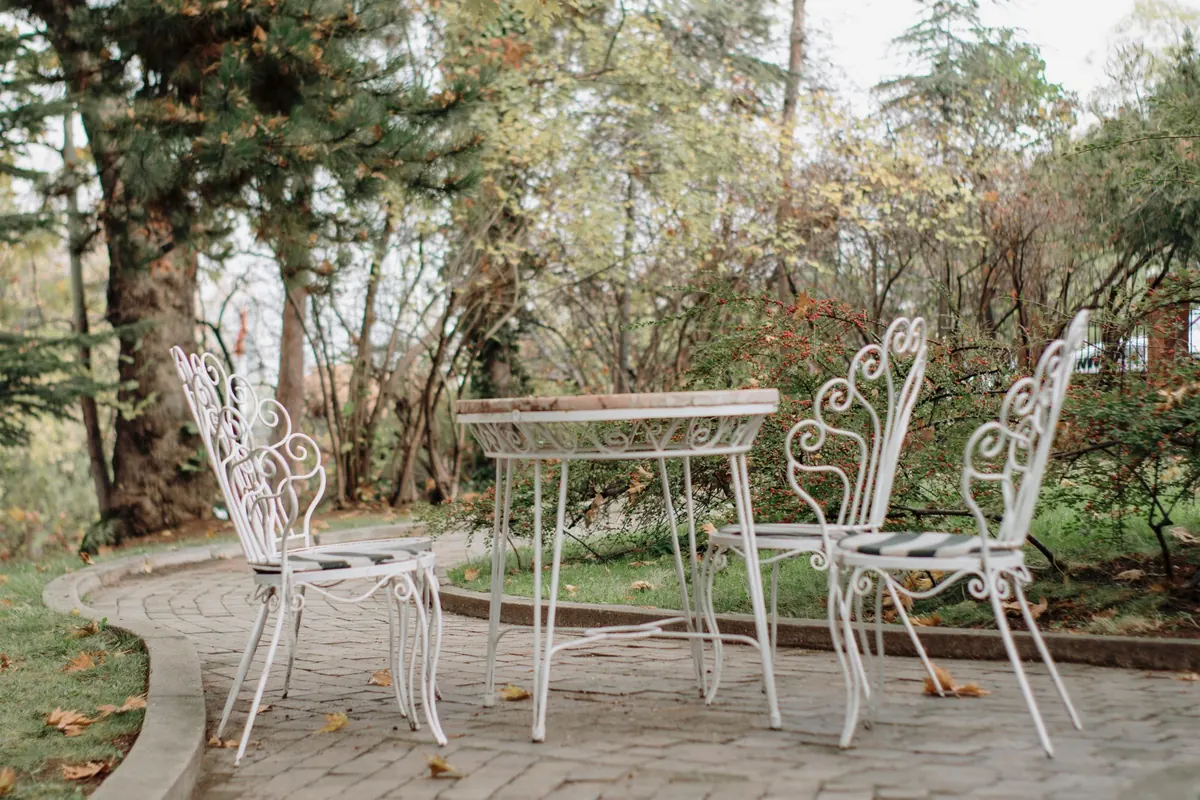
A corner of the garden, a strip of paving beside the shed, the shaded patch behind the kitchen wall where nothing much grows. Most of us have one of those spots, and most of us have stood in it wondering whether it wants a hammock or a lounger. Both promise the same simple thing: somewhere to put the book down and do nothing for twenty minutes. But they ask for very different things in return — floor space, fixing points, patience on assembly day, and a certain amount of care through the winter. The better choice usually comes down less to taste than to the shape of your plot and the way you actually rest.
Measure the Space, Not the Dream
A lounger is the more predictable of the two. A typical model is around 65 to 80 cm wide and close to two metres long when the backrest is flat, and it needs a little clearance behind the head end so it can recline without hitting a wall or a planter. Add at least half a metre at the side where you step in and out — the moment you squeeze a lounger against a fence, you will start approaching it sideways with a mug in your hand, which never ends well.
A hammock is fussier. A gathered-end hammock of the classic kind is roughly three metres of fabric, and to hang comfortably it wants two solid anchors about three to three and a half metres apart, fixed at a height that gives you a gentle curve rather than a taut washing line. If your corner has two healthy trees at that spacing, you are fortunate. If not, you are looking at a hammock stand, which takes up a footprint of roughly three metres by one — longer than a lounger, though it occupies the ground in a thin frame rather than as a solid block.
Before buying either, do the cheap test: lay a hose or a length of string on the ground to mark the outline, then live with it for a day. Walk past it, step over it, see whether the shed door still opens. It takes ten minutes and saves a return trip.
Comfort: Two Very Different Kinds of Rest
The hammock
A hammock cradles you. Your weight is spread along the fabric, your knees lift slightly, and the small sway does something quietly convincing to a tired afternoon. Lie on the diagonal — head to one side of the fabric, feet to the other — and the hammock flattens out, which is far kinder to your shoulders than lying along the centre line. It is superb for a nap and very good for reading with a cushion behind your head. It is less good if you want to sit upright with a drink, and less good if you are carrying a full cup of tea and hoping to get out gracefully.
The lounger
A lounger gives you structure. The backrest holds you where you put it, so you can sit up to talk, drop back to read, and stand up without a small comedy of wobbling. For anyone with a stiff back, sore knees or limited mobility, that predictability matters more than the romance of the sway. A lounger also handles the social side better: a child can perch at the foot end, a plate can rest on the arm, and a second chair can be pulled alongside without anyone negotiating an entry and exit route.
If you have a back problem or a recent injury, treat a garden article as a starting point only and ask a physiotherapist or your doctor which position you should be spending time in.
Setup and Fixing Points
Loungers are mostly dull to assemble, which is a virtue. Wooden models take perhaps half an hour with an Allen key; folding aluminium ones often arrive ready to unfold. The only real decision is whether the ground is level enough that it does not rock.
Hammocks need a little more thought. Two rules keep you and your trees out of trouble. First, use wide tree straps rather than rope or chain, which cut into bark and can damage the layer that carries water up the trunk. Second, hang from something genuinely solid — a trunk of reasonable diameter, not a slim branch that flexes when you push it. Height matters too: fix the straps at roughly chest height for a three-metre span, then adjust until the hammock hangs with a relaxed curve. Too tight and it becomes a plank; too loose and you sit on the ground.
If you plan to fix to a wall, remember that old render hides a lot. Masonry anchors need solid brick or block, not a single skin or a hollow patch, and if you are unsure what is behind the plaster, a builder will tell you in five minutes what a fall will teach you in one. A freestanding stand avoids the question entirely, though it must sit on level ground and should never be loaded near the very end of the frame.
How Each One Fits Daily Life
Storage is where the hammock quietly wins. It folds into a bag the size of a melon and disappears into a cupboard for eight months. A lounger needs a shed, a garage or a decent cover, and wooden ones resent being dragged across gravel.
Manoeuvrability goes the other way. A folding lounger can be moved with one hand to follow the shade across the patio, which in a small garden is a real advantage — the sun moves, and so should your seat. A hammock, once hung, stays where it is.
- If your corner is shaded all afternoon: a hammock is the natural fit, since it rarely needs moving.
- If your corner bakes and you chase the shade: a light folding lounger will earn its keep.
- If children use the garden: a lounger is easier to supervise and harder to tip than a swinging hammock.
- If the space doubles as a route to the tap or the shed: a hammock frees the ground beneath it, a stand does not.
Maintenance Through the Seasons
Neither option is high-maintenance, but each has its own weak point. Fabric hammocks suffer from damp: pack them away dry, never fold a wet one into a bag, and check the straps each spring for fading or fraying. Most are washable following the maker's label, and a mild soap and a rinse is usually enough. Rope hammocks stretch over time and can be re-tensioned; fabric ones are more likely to need replacing outright after several seasons of strong sun.
Loungers fail at the joints and the cushions. Wooden frames want an annual oil or a fresh coat of finish if you want to keep the colour, and the bolts underneath need a tighten once a year — loose bolts are what make a lounger feel rickety long before the timber is tired. Metal frames need chips touched in before rust takes hold. Cushions should come indoors in the rain and be bone dry before they go into storage, or you will meet them again in spring with a smell you cannot unmeet.
Choosing for Your Corner
If you have two sound trees or two solid posts at roughly three metres, and you mostly want to nap, read and be gently rocked, hang a hammock. Move it in October and forget it until April.
If your space is a narrow strip against a wall, if you want to sit up with a coffee, if someone in the household finds low seats difficult, or if you like the idea of shifting your seat to follow the shade, take the lounger. It will never sway, and it will always be where you left it.
And if the corner is genuinely tiny — a metre and a half, say — consider neither, at least not yet. A single deep chair with a small side table often delivers more usable rest per square centimetre than either option, and leaves room to add a hammock later once you have lived with the space for a season. Measure first, mark the outline, then buy. The best resting spot in a small garden is the one you can reach without moving anything.
Photo: whitedaemon / Pixabay