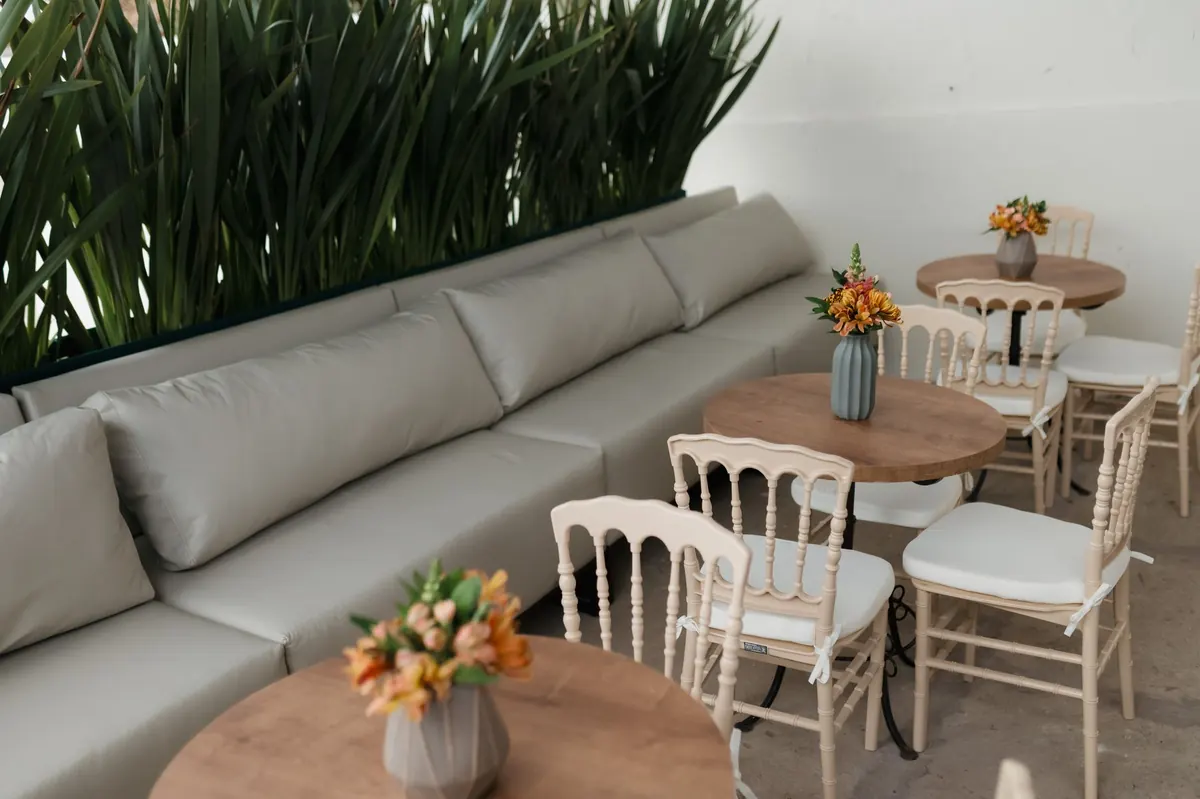
A good garden furniture layout should feel effortless: you step outside, find a seat, set down a drink, and move on without sidestepping a chair or apologising to a table. When a terrace feels awkward, the problem is rarely the furniture itself. More often it is the arrangement. A few small adjustments can turn a cramped patio into a room that invites people to linger. These are five common mistakes to look for, and practical ways to correct each one.
Mistake 1: Blocking the natural route through the garden
Every outdoor space has a natural line of travel: the back door to the lawn, the gate to the dining table, the kitchen to the shade. Furniture placed across that line creates a daily obstacle course. A chair pulled out from the table can trap someone at the grill; a planter beside a lounge chair can turn a simple trip with a tray into a balancing act.
Walk the route yourself before you move anything. Start at the door you use most often and follow the path you take with a cup of coffee, a plate of food, or a watering can. Leave a clear route wide enough for two people to pass, or for one person carrying something bulky. If a piece has to be moved every time someone walks by, it is in the wrong place.
Fix it by creating a clear spine through the space. Pull seating groups slightly to one side, angle a table rather than centring it in the doorway, and keep the route free of small side tables and footstools. The goal is not empty space for its own sake; it is a layout that lets the garden work without asking guests to choreograph their steps.
Mistake 2: Overcrowding the patio
More furniture does not make a patio more comfortable. It often does the opposite. When every corner is filled with chairs, stools, planters and tables, the eye has nowhere to rest and movement becomes cautious. People end up perched rather than settled.
Overcrowding usually happens gradually. An extra chair arrives for a party and never leaves; a side table is added beside the sofa; a second bench is squeezed against the wall. Before long, the space looks furnished but feels tight.
Use this quick check:
- Can every chair be pulled out and pushed back without hitting something?
- Can two people walk between the seating group and the table without turning sideways?
- Is there a clear spot to set down a tray, a book or a glass without balancing it on an armrest?
- Does the space still feel calm when the cushions and blankets are not perfectly arranged?
Fix it by removing one piece rather than adding another. Store occasional chairs, use nesting tables, and choose stools that can double as side tables. Negative space is not wasted; it is what makes the furniture usable.
Mistake 3: Ignoring scale and proportion
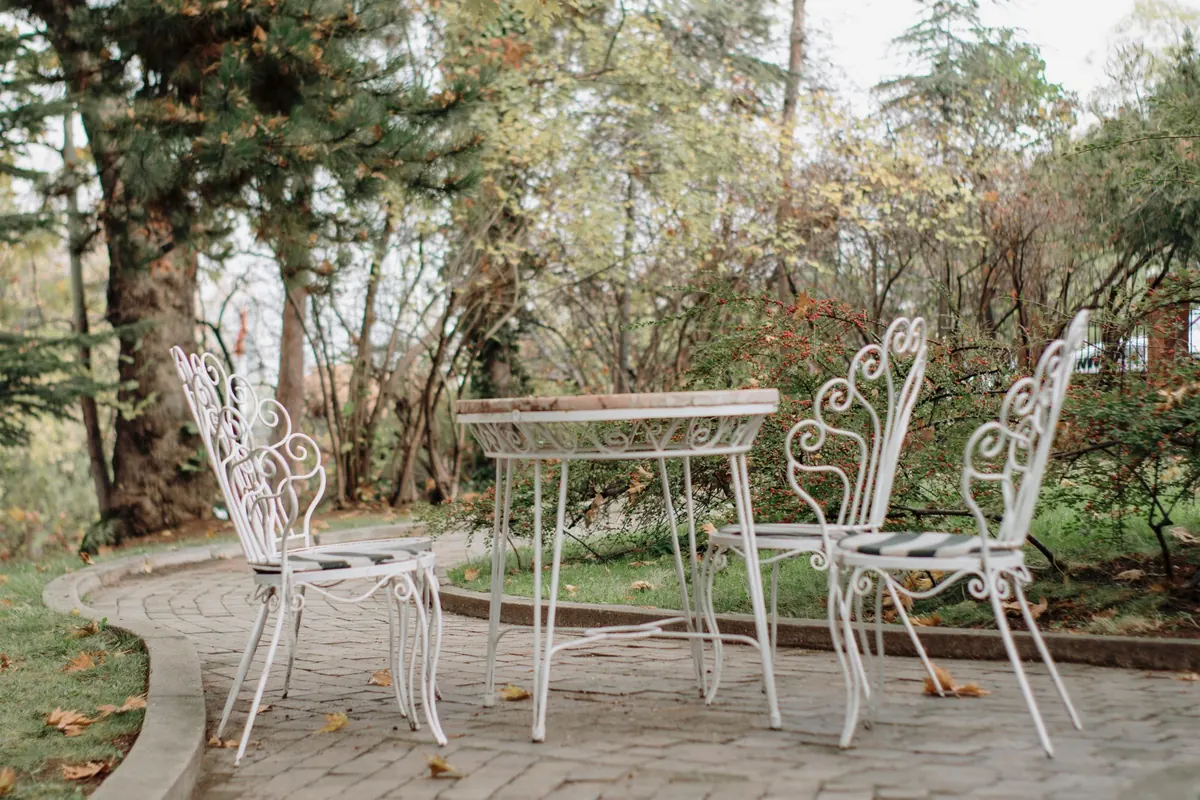
Scale is the quiet reason a layout feels wrong even when each piece is attractive. A deep lounge sofa can swallow a small balcony, leaving no room to walk past it. A delicate bistro set can disappear on a wide terrace, making the space feel unfinished.
Before buying or rearranging, measure the area and mark the footprint of each piece with painter’s tape or string. Include the space needed to pull out chairs, open a parasol, or walk around the table. Then stand back and look at the outline from the door. If the tape shape already leaves no breathing room, the real furniture will feel even tighter.
Balance matters as well. A large table can be offset by a substantial planter or a generous rug; a small table on a big patio may need a clear anchor, such as a shade sail, a bench, or a defined dining zone. Match the visual weight of the furniture to the size of the space, not just the dimensions on a product page.
Mistake 4: Pushing everything against the walls
Pushing every chair and table against the house or boundary feels safe, but it often creates a wide, empty centre and a row of furniture that is difficult to use. Conversation becomes side-by-side rather than face-to-face, and the patio starts to look like a showroom rather than a room.
Try floating at least one seating group away from the wall. A pair of chairs facing each other, with a small table between them, can make a compact conversation zone. An outdoor rug can define the group and stop it from looking stranded. Keep a clear route behind the chairs if people need to pass, but do not be afraid of a little space around the furniture.
On a narrow balcony, floating may mean angling a small table into the corner or using a slim bench along one side and a single chair opposite. The point is to create a shape people can use: a circle, a square, a loose U. Furniture arranged for conversation will feel more welcoming than furniture arranged only to save space.
Mistake 5: Forgetting how the space is actually used
A layout can look perfect in the morning and become uncomfortable by afternoon. The sun moves, the wind changes, and the table that seemed well placed is suddenly in the hottest spot or too far from the kitchen. Storage is another common oversight: cushions, throws and parasols need a home, or they end up stacked on chairs.
Think through a typical day rather than a single snapshot. Where do you eat breakfast? Where do you read in the shade? Where do children or guests naturally gather? If the dining table is used mostly in the evening, place it where the last sunlight falls rather than where it looks best at noon. If the seating area is exposed to wind, use a planter, screen or hedge as a buffer.
Keep the layout flexible. Lightweight chairs, folding tables and stools that double as side tables make it easier to adapt to different occasions. A permanent arrangement is convenient only if it suits the way you live.
A simple reset for better flow
Start with one zone at a time. Clear the furniture from the patio, sweep the surface, and walk the main route from door to garden. Then bring back only what you need for the way you use the space. Place the largest piece first, add seating around a clear focal point, and leave the walkways open. Step back from the doorway and look at the layout from a guest’s point of view. If you have to move something to get to a seat, move it permanently. If a corner feels empty, resist filling it immediately; empty space often improves flow. Finally, live with the arrangement for a week before buying anything new. Small adjustments—a chair angled inward, a table shifted half a metre, a planter moved out of the path—can make a garden feel calmer, more generous and easier to enjoy.
Photo: Jonathan Borba / Pexels