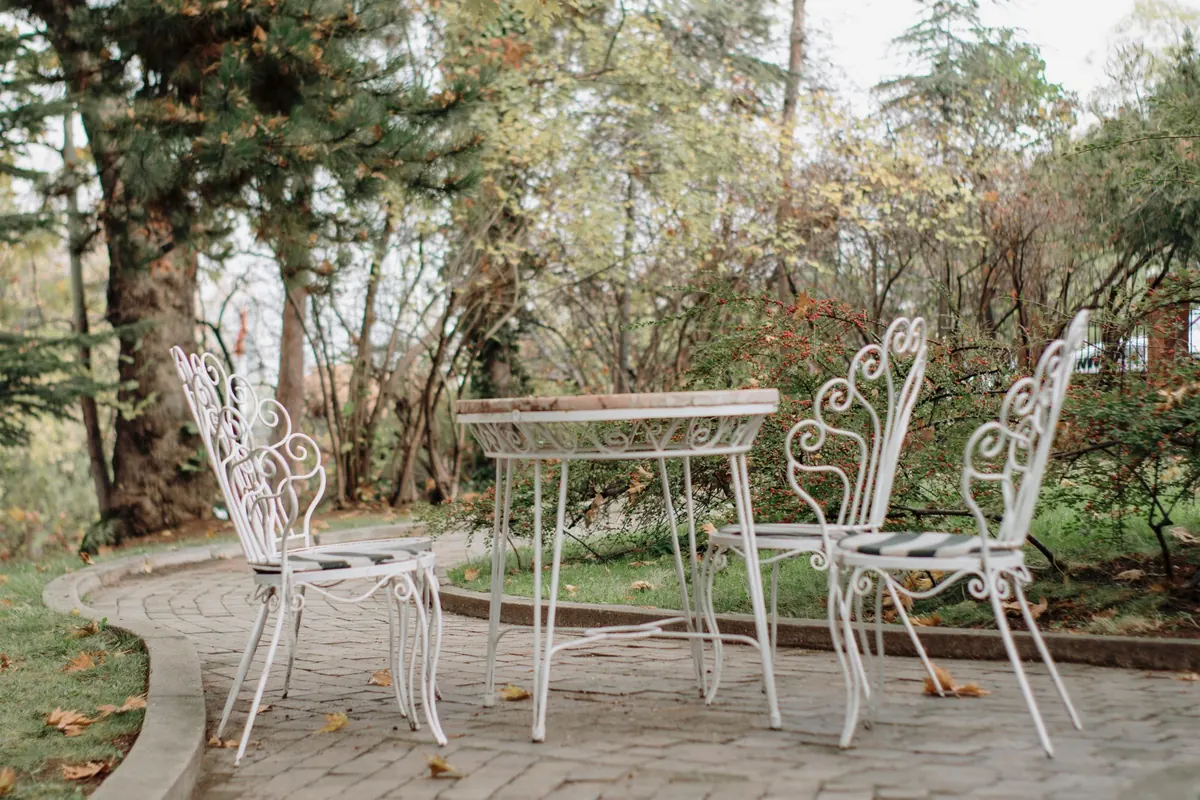
A garden corner can look wonderful in a photograph and still be a place nobody sits. The furniture is fine. The cushions are fine. What fails is the air around the seat: hard light, a distant road, a neighbour's radio, nothing to smell but hot paving. Three elements decide whether an outdoor seat feels restful, and all three respond well to deliberate design. Call it the Shade-Sound-Scent Rule. Get those three right and almost any corner becomes somewhere you linger; get them wrong and no amount of teak and lanterns will save it.
The order matters. Shade is structural, sound is mechanical, scent is horticultural. Work through them in that sequence and each decision makes the next one easier.
Shade First, Because Everything Else Fails in Direct Sun
Shade is the frame of a relaxation area. Without it, a seat is usable for two narrow windows of the day and unbearable in between — and the plants that would give you scent and rustle will struggle as well. Before choosing a single cushion, spend a warm day watching the spot. Note where the sun sits at eleven in the morning, at two in the afternoon, and at eight in the evening. Repeat in a second season if you can. The shadow pattern in June is not the one you get in September, and most people design for the wrong month.
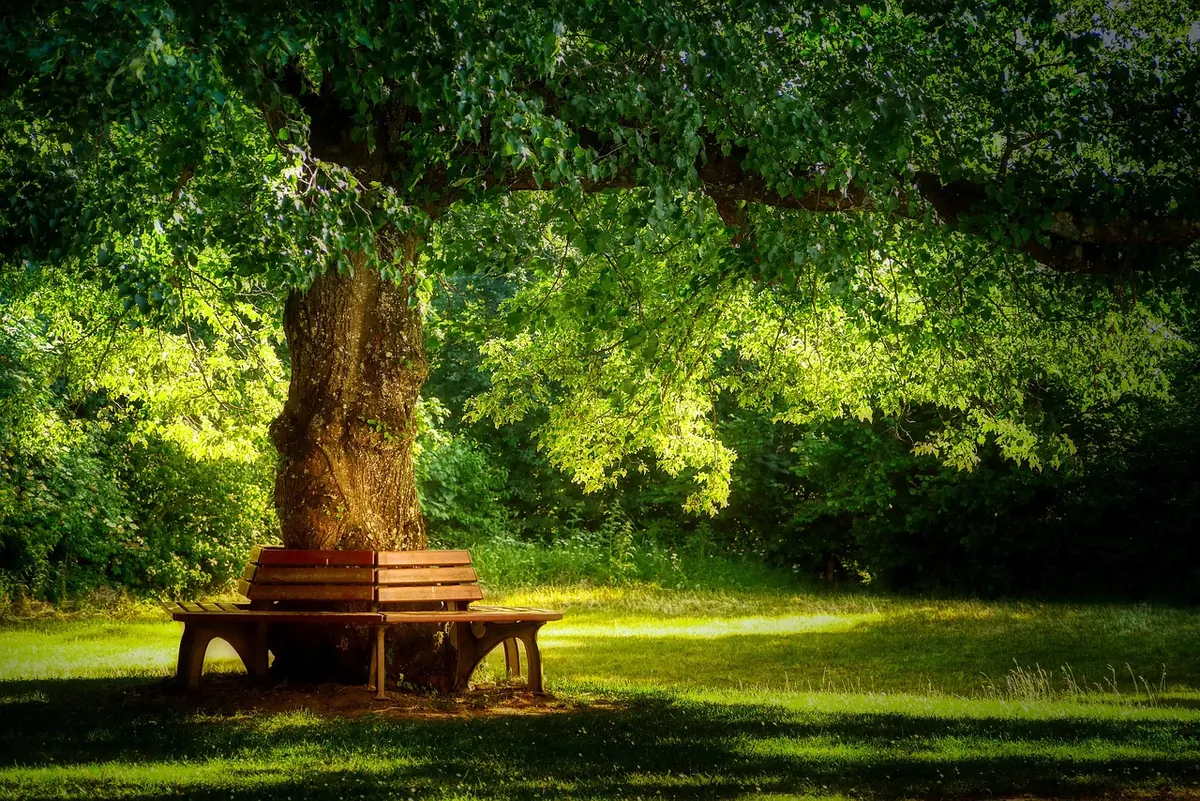
Solid, heavy shade is rarely the answer. Aim for dappled light: it feels cooler, keeps the ground from turning into a dark, damp patch, and lets you grow something underneath. A deciduous tree is the most generous solution — leaf cover exactly when you need it, low winter sun when you don't. A pergola with slatted rafters gives you the same effect on a smaller footprint, and the proportion of light is easy to tune by adjusting the spacing of the slats. Shade sails work well over a dining table, though they flap in exposed gardens. Vines over a simple timber frame are the cheapest option and the slowest to arrive.
Two details people forget. First, what sits underfoot: stone and concrete hold heat and radiate it back at you long after the sun has moved on, while gravel, grass and decking stay kinder. Second, air movement. A shady corner with no breeze becomes stuffy by mid-afternoon, so leave a gap at the base of a wall, a hedge or a fence and let air pass through.
Sound: Mask Before You Add
You cannot delete a road, a railway line or a neighbour's heat pump. What you can do is change what your ear notices first. The useful principle is masking: introduce a pleasant, continuous sound that sits between you and the noise you dislike, so the intrusive sound loses its sharp edges.
Moving water does this better than anything else. It does not need to be grand. A narrow sheet of water falling forty to sixty centimetres into a basin produces a broadband, gentle hiss that covers traffic remarkably well, and it costs little to run. The common mistake is scale: a large, splashy feature is louder than you want, throws spray onto paving where it encourages slippery algae, and empties itself in a day of wind. A small pump in a covered reservoir, topped up now and then, is the practical version.
Where to put it
Position the water between the seat and the source of the noise, not behind your head. If the road is to the north, the fountain goes north of the chair. Sound, like light, has a direction, and placing a fountain on the wrong side means you hear both it and the traffic.
Then add the quieter layers:
- Rustle. Ornamental grasses, bamboo in a root-barrier container, birch and silver-leaved shrubs all make a soft, dry sound in a light breeze. Leave seedheads standing through autumn for the same reason.
- Chimes, used sparingly. Wood or bamboo, tuned low, hung where there is a gentle draught rather than a wind tunnel. Metal chimes in an exposed spot become a nuisance within a week.
- Birds. A shallow birdbath and a dense evergreen shrub for cover will do more than any feeder.
- Silence the small faults. A creaking gate, a rattling downpipe, a buzzing pump. These are the sounds your brain fixates on, and they are all easy to fix.
Fragrance Designed for Evening, Not for the View
Scent is the element most often planted for the wrong reasons. A highly fragrant climber halfway up a wall looks lovely and gives you nothing at head height. Fragrant plants need to be within about two metres of where a person's face will actually be, ideally at sitting height or below, so the scent rises towards you as the air cools.
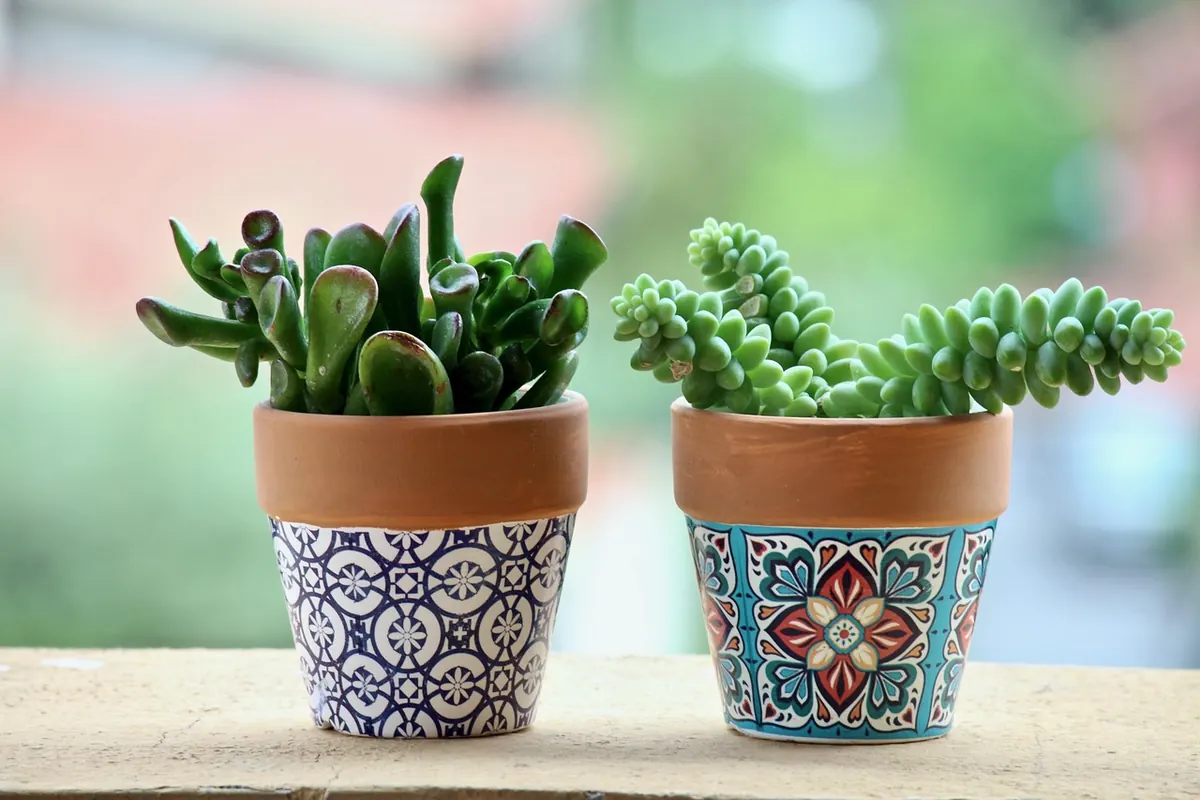
Evening matters most. Warm, still, humid air carries fragrance best, which is why a garden that seems scentless at noon can be overpowering at dusk. Plant for that moment: night-scented stock, tobacco plant, honeysuckle, and any jasmine that opens after dark. For daytime, keep something you can brush against — rosemary, lavender, lemon verbena, scented geraniums — right beside the arm of the chair. A single step or a trailing hand releases more scent than a dozen flowers two metres away.
Give plants a warm surface to breathe over. A low stone wall or a sun-soaked patio releases fragrance steadily through the evening, whereas a plant stranded in cool lawn gives up early. Winter is not lost either: sweet box and wintersweet carry a small garden through January.
Restraint matters. Two or three scents in a season is plenty; a dozen competing fragrances cancel each other out and can be genuinely unpleasant for anyone sensitive to strong smells. If the seat is shared with someone prone to allergies or headaches from perfume, keep the strongest flowers at the far edge of the garden rather than at the table.
Putting the Three Together
The framework becomes useful when you apply it in sequence rather than as a shopping list. A workable order:
- Sit in the spot at midday and again in the evening, in the season you will use it most. Listen. Notice where you want to look.
- Fix the shade — tree, pergola or sail — and check the ground surface beneath it.
- Identify the worst noise and place water, or a rustling screen of plants, between it and the seat.
- Plant scent within reach of the chair, choosing two or three varieties that peak at different times.
- Only now choose furniture, then lighting. Both are easier once you know where the shade sits and which way you will be facing.
Mistakes That Quietly Undo the Calm
Too much shade is the first. A corner sealed under dense evergreen becomes dark, airless and damp, and damp corners breed mosquitoes. Keep the canopy high and broken. Water that splashes onto paving is the second — it looks lively for a week and then turns into a green, slippery surface. Scent placed at the dining table rather than the reading chair is a third; nobody wants perfume with lunch. Designing only for July is the fourth, and the most common: check how the space behaves in April and October before you commit to a planting plan.
Start Small This Weekend
None of this requires a builder. A shade sail over an existing bench, a small pump-fed fountain on the noisy side of the seat, and one potted star jasmine at the arm of the chair will change how a corner feels in a single afternoon. Then live with it for a season before adding anything else.
Keep the maintenance light but regular: prune the climber so it does not swallow the frame, skim and top up the water, deadhead the flowers that have finished. When something stops working, return to the three questions in order. Is there enough shade? Is there a sound I actually enjoy, in the right place? Is there something to smell within arm's reach? The rule is a filter, not a formula — but it rarely points you in the wrong direction.
Photo: fietzfotos / Pixabay