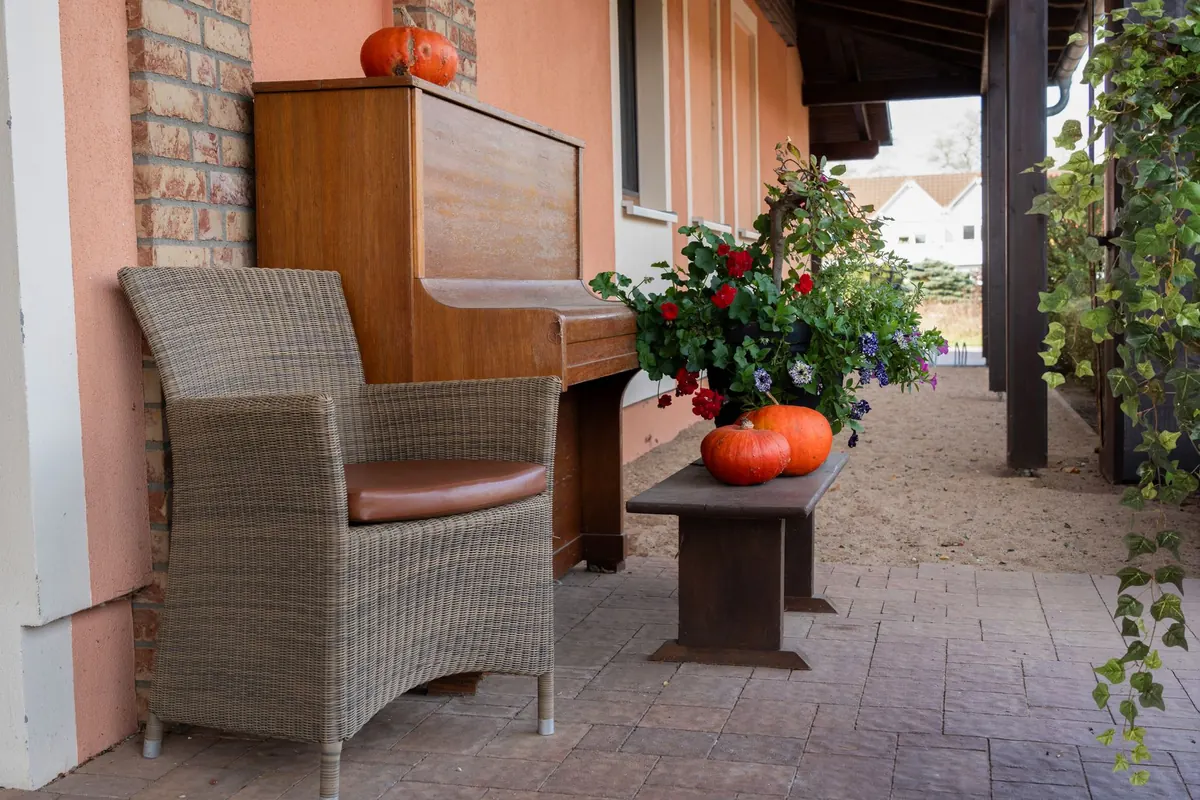
Autumn arrives quietly in a garden. One evening you reach for a second layer, the cushions feel cold when you sit down, and the light disappears before you have finished your coffee outside. That is the moment to refresh the seating area rather than abandon it until spring.
The work is smaller than it sounds. A few warmer textures, a better arrangement of light, and planters that hold their shape through wind and wet will carry an outdoor room well past the equinox. What follows is the order I work through each year: soft furnishings first, then lighting, then pots, then the unglamorous jobs that protect everything you have just done.
Cushions First: Warmth You Can Actually Sit On
Autumn is hard on textiles. Damp mornings, a low sun that never quite dries the fabric, and fallen leaves that hold moisture against a seat. Before buying anything new, take the summer cushions inside, wash the covers according to their labels, and dry the inserts somewhere airy — a shed or garage floor, not a damp lawn — so they go back out soft rather than musty.
Then choose your route. Two work well:
- Leave them out: solution-dyed acrylic and olefin covers hold their colour and cope with light showers. Look for removable, washable covers and foam inserts that dry quickly rather than staying heavy for days.
- Bring them in daily: wool, bouclé, brushed cotton and velvet feel superb against a cool evening, but they need to come inside at night or before rain. Keep a lidded box by the door so nobody has to walk to the loft with an armful.
On colour, pick two or three tones and repeat them: rust, ochre, deep olive, plum. If your furniture is grey or black, add warmth through texture instead of pattern — a ribbed weave, a heavy bouclé, a plain linen-look cover with a piped edge. Tie-backs and piped seams are the difference between a seat that looks styled and one that looks like a pile of cushions.
Fit, filling and the small habits
Bench cushions should be roughly five centimetres wider than the seat so they tuck in rather than slide. Back cushions work best when they are firm enough to hold their shape — soft ones collapse after a week. Plump everything when you open up in the morning, and turn the cushions over once a week so one side does not fade and flatten before the other.
A washable outdoor rug does more for autumn than it gets credit for. It warms the floor underfoot, defines the seating zone, and stops leaves and grit being walked inside. Choose a flat weave with a rubber-backed or breathable underlay, and hang it over a rail to dry after heavy rain rather than leaving it flat and sodden.
Lanterns and Light: Stretch the Evening
Autumn lighting is not about brightness. It is about placing a few small pools of warm light where people actually sit, so the evening feels longer than it is. Start by walking out at dusk and noticing where the dark patches are — usually the step from the door to the terrace, the corner of the table, and the far edge of the seating.
Build in layers rather than one source. A lantern on the dining table, a second on the step, a third by the bench, and a string of warm bulbs along one wall gives depth without glare. Choose bulbs around 2200–2700K; anything cooler starts to feel like a car park. Rechargeable table lamps are now genuinely useful outdoors and can be carried in when it rains.
Real candles need protection from drafts or they will gutter and smoke. A glass chimney or a lantern with a vented lid solves the problem; a bare candle on a windy terrace does not. Set lanterns on stable, flat surfaces away from dry grasses and fabric, and keep them out of the reach of children and pets. Where naked flame is impractical, LED candles in a decent metal or glass holder look close enough after dark.
Finally, light the path, not only the party. A lantern beside the door and one at each level change is safety, not decoration — and check cables and outdoor sockets are properly sealed and protected before you plug anything in.
Planters: Structure Beats Summer Colour
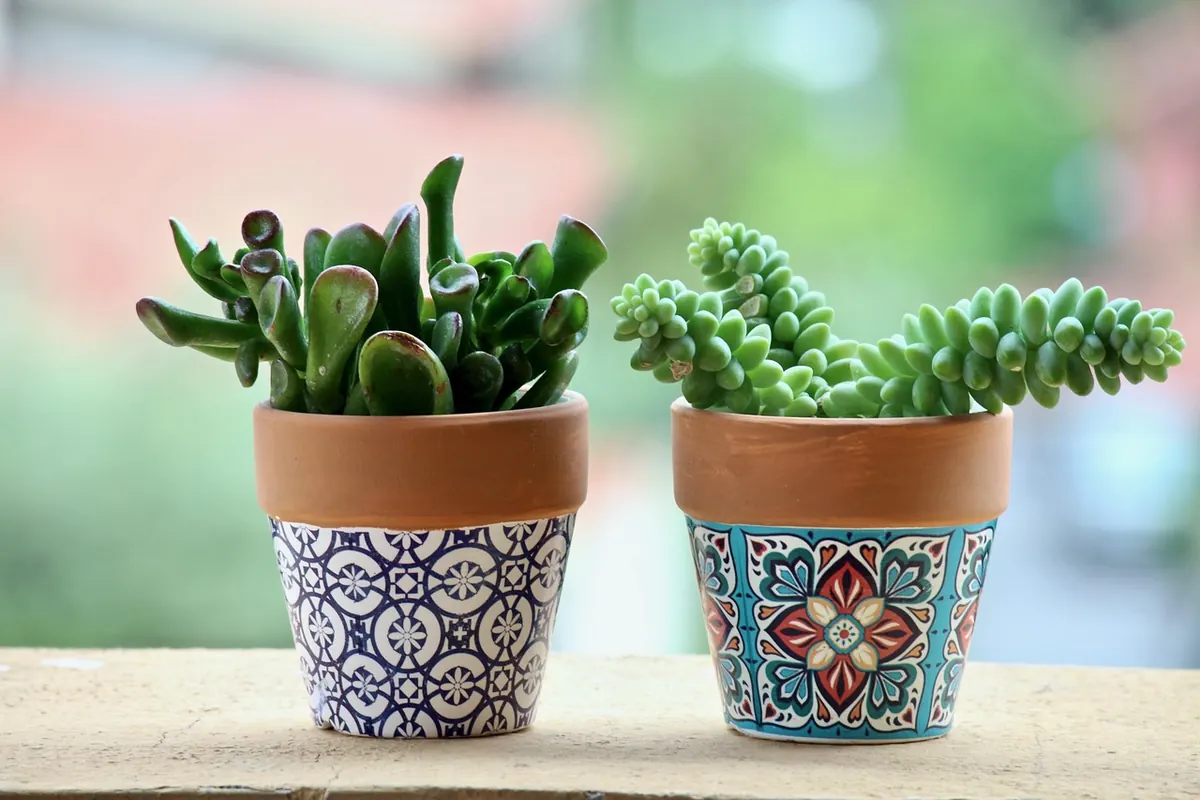
Summer pots end the season looking tired, and half-hardy bedding collapses at the first cold night. Autumn is the moment to replant with things that hold their shape: ornamental kale and cabbages, heathers, cyclamen, carex and other grasses, skimmia, ivy, violas and small hardy evergreens. One generous pot always looks better than five small ones, and a group of three at different heights does more for a doorway than a straight line.
Plant in layers for a longer payoff. Set spring bulbs — tulips, narcissi, small alliums — deep in fresh compost, then bed the winter plants above them. You get structure now and flowers in March from the same pot.
Drainage matters more than anything else in autumn. Empty the saucers, raise pots onto feet so water runs away, and move glazed and terracotta containers onto a sheltered wall or into a shed if hard frosts are likely where you live. Heavy stoneware and frost-proof composite pots can stay put, but a large pot with a light compost is easier to move now than a frozen one in January. Group pots together to shelter each other, and check they are not sitting where the gutter pours.
Your Seasonal Checklist
- Wash and dry all cushion covers and inserts; retire anything that stays damp.
- Add two or three warmer-textured cushions and one wool throw in a lidded outdoor box.
- Roll out a weather-ready rug and check the underside is breathable.
- Clear and clean every lantern, replace candles or charge the LEDs.
- Test all outdoor lights and check cables, timers and seals.
- Empty and replant the tired summer pots with layered bulbs and evergreens.
- Lift pots onto feet and clear every saucer.
- Sweep leaves from corners, drains and under furniture.
- Wipe down frames and tighten any loose bolts or ties.
- Store summer textiles and solar lights indoors before the first frost.
Keeping It Weather-Ready
A ten-minute routine after wet or windy weather keeps the refresh looking deliberate for weeks. Tip the water out of saucers, shake and hang the rug, wipe the glass on the lanterns so the light stays clear, and check that ties and covers have not come loose. If you cover furniture, use a breathable cover propped slightly off the surface; a plastic sheet traps condensation and does more harm than leaving the frame bare.
Fabric left out for weeks in drizzle will eventually smell, so build in one dry weekend a month to bring the cushions inside, air the inserts and let the covers breathe. Store lanterns with the candles removed, and keep a small box of spare candles, matches and a spare bulb near the door where you will actually find them.
Finish the Season in One Afternoon
Don't attempt all of this at once. Start with the cushions and the light, because those are the two things you notice the moment you sit down with a drink at six o'clock. Then replant the pots on a dry morning when you have compost to hand. Leave the storage jobs for the first genuinely cold forecast, and do them properly rather than shoving everything into a corner.
An autumn terrace does not need to look decorated. It needs to feel warmer than the weather outside: something soft to sit on, a lantern within reach, and a pot with a bit of shape by the step. Do those three things this weekend and the season will look after itself.
Photo: Gundula Vogel / Pexels